EQC Repaired Our House, But It Still Doesn’t Feel Right — What Should We Do Next?
EQC or insurer repairs were meant to put things right after the Canterbury earthquakes — but for a real number of Christchurch homeowners, something still isn’t quite sitting well years later. Doors that stick again. A crack that was patched and has since reopened. A floor that feels like it’s sloping in one corner. If any of that sounds familiar, here’s how to work out what’s actually going on, and what to do about it.
Signs Your EQC Repaired House Isn’t Right
- Cracks that were repaired and have since reappeared in the same location
- Doors or windows that stick or no longer close properly, especially if this has developed since the original repair
- Floors that feel sloped, or a noticeable dip or rise in the middle of a room
- Gutters or downpipes that no longer sit or drain the way they should
- Interior linings that continue to crack in the same spots after being patched or repainted
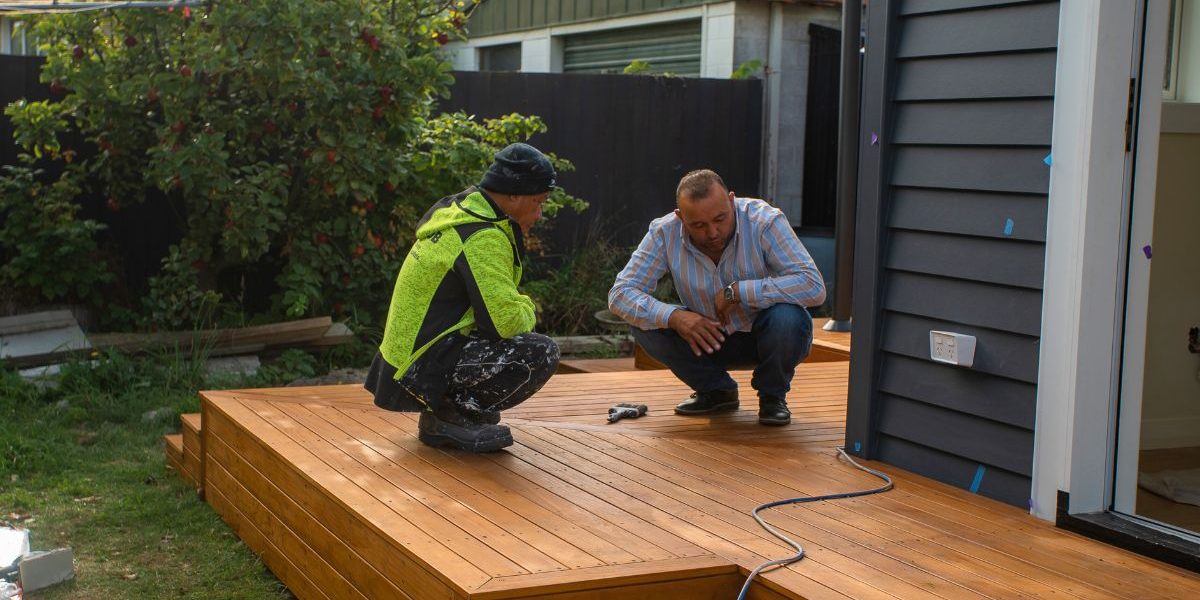
Builder and homeowner discussing an on-site repair assessment in Christchurch
Why This Happens
Not every repair carried out in the years after the earthquakes was brought fully up to current standards. Some were genuine temporary fixes that were never followed up. Others were completed without the right permits, or addressed the visible symptom without resolving the underlying foundation movement causing it — which is why the same crack or the same sticking door tends to come back in the same place.
What to Do Next
The first step is an independent assessment — not necessarily by the same party who carried out the original repair, particularly if you suspect that repair is the issue. A proper assessment looks at the foundation itself, not just the visible symptom, to establish whether what you’re seeing is cosmetic or a sign the underlying repair didn’t hold.
- Gather what documentation you have from the original repair — scope of works, insurer correspondence, any engineering reports.
- Get a specialist foundation assessment, separate from a general building inspection.
- Ask specifically whether the original repair method (for example, jack and pack) was completed to a compliant standard.
Why This Matters More in Christchurch Than Elsewhere
With more than 10 years of hands-on experience in earthquake building repairs, JAR Builders has seen this exact pattern repeatedly across Canterbury — a property that was “fixed” once, sometimes twice, without the underlying foundation issue actually being resolved. That history matters when assessing whether a current problem is new or a continuation of something that was never properly addressed the first time.
Frequently Asked Questions
What if EQC repaired my house but it still isn’t fixed?
Get an independent foundation assessment to establish whether the original repair addressed the underlying movement or only the visible symptom. Recurring cracks, sticking doors, and sloping floors are common signs the original repair may not have held.
Can I get a repair reassessed years after EQC or my insurer signed it off?
Yes — there’s no time limit on getting an independent assessment of a property’s current condition, regardless of when the original repair was completed or signed off.
How do I know if a crack is new or a sign of a failed repair?
A crack reappearing in the same location as a previous repair is a strong indicator that the underlying issue wasn’t fully resolved, rather than a new, unrelated problem.
Not sure whether a past repair on your home was done properly? Get in touch for an assessment, or read more about our insurance repair experience.