As Is Where Is Properties – What Are The Risks And Are They Worth It?
“As Is Where Is” (AIWI) properties are often linked to unresolved earthquake damage (particularly in Canterbury) and while the low price can look attractive, the true cost of ownership is frequently much higher than it appears. Common issues include foundation damage, structural cracking, water ingress, and non-compliant services. Before committing to an AIWI house purchase, get a LIM report, specialist foundation assessment, geotechnical report, and insurance advice.
As Is Where Is properties can look like an incredible deal on paper. A home at well below market value, in a suburb you’d normally struggle to afford, at a price that seems too good to pass up. But these properties come with a category of risk that most buyers aren’t fully prepared for, and the gap between the purchase price and the true cost to occupy can be significant.
This guide is written to give you a clear, honest picture of what As Is Where Is really means, particularly in the Canterbury context, what the common issues look like, what repairs typically involve, and how to think about whether the numbers actually stack up.
What Does “As Is Where Is” Mean?
An As Is Where Is (AIWI) property is one sold in its current condition, with no warranty from the vendor about the state of the building. The buyer accepts all known and unknown defects at the point of sale.
In Canterbury, As Is Where Is properties are usually closely connected to the 2010 and 2011 earthquake sequence.
Many of these homes are ones where insurance settlements were accepted by the owner but the building work was never completed, or where on-sold properties changed hands with residual damage that was not fully remediated. A significant number are also homes that became uninsurable following the earthquakes, either because of their condition or because of the land categorisation they sit on.
It is important to understand that purchasing an AIWIS property does not automatically mean you are buying a disaster. Some of these homes have superficial damage that has been cosmetically patched. Others have deep structural issues that are not visible on a walkthrough. The challenge is knowing which situation you are actually in, and that requires specialist assessment before you commit.
Why Are There Still As Is Where Is Properties Being Sold In Christchurch?
More than a decade after the Canterbury earthquakes, there are still a meaningful number of AIWI and uninsurable properties circulating in the market. There are a few reasons for this. Some homeowners accepted EQC/NHC payouts but used the funds for other purposes rather than completing repairs. When they sell, the outstanding repair work passes to the buyer. Other properties have changed hands multiple times since the earthquakes, with each sale potentially obscuring the original damage history further.
There is also a category of properties where geotechnical conditions, particularly in areas prone to liquefaction or lateral spreading, have made obtaining full replacement insurance difficult or impossible. Lenders are generally unwilling to advance standard mortgages on these homes, which limits the buyer pool to cash purchasers and further depresses the sale price. The result is a segment of the Christchurch market that attracts investors, developers, and buyers willing to take on significant risk in exchange for a lower entry price.
What Are The Most Common Issues Found In As Is Where Is Properties?
Understanding the typical defects in AIWI Canterbury properties helps you ask better questions and commission the right assessments. The issues tend to cluster into a few categories.
1. Foundation And Sub-Floor Problems
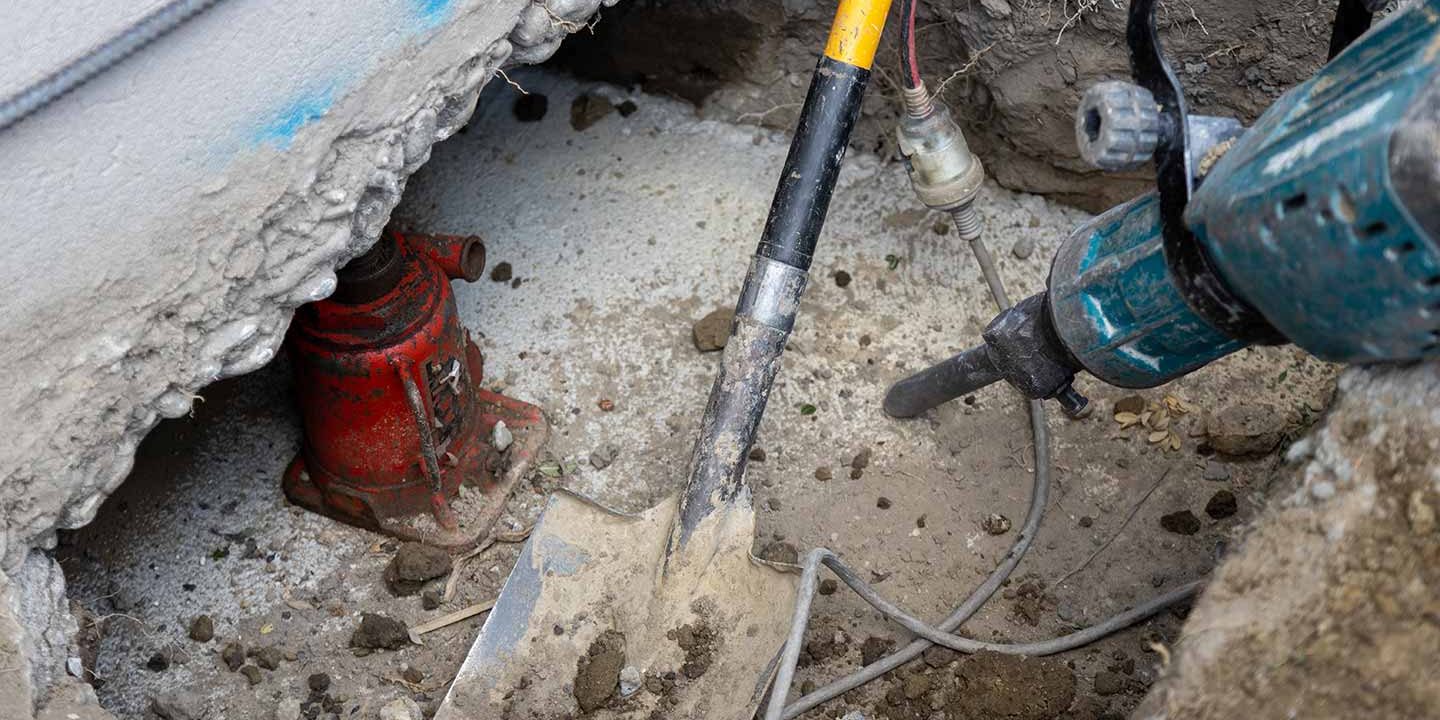
Foundation damage is by far the most common structural issue in post-earthquake homes. This can present as uneven floors, sticking doors and windows, visible cracking in cladding or internal linings, or gaps where the floor meets the wall. Beneath the surface, the causes vary considerably. Pile rot or failure, broken or inadequate cross-bracing, settled concrete perimeter foundations, and full foundation failure all require different remediation approaches and carry very different costs. A building inspection will identify visible symptoms, but a foundation specialist assessment is required to understand the true scope. Re-levelling a house on timber piles is a very different project to remediating a failed concrete slab on a liquefaction-prone site.
2. Cracking And Structural Movement
Cracking in Canterbury homes exists on a spectrum. Fine hairline cracking in plasterboard linings is common in older homes and is often cosmetic. Wide diagonal cracking through brick, block, or concrete elements is a different matter and can indicate ongoing structural movement. The concern with AIWIS properties is that cosmetic repairs, such as filling and repainting cracks, can mask the extent of underlying movement. A thorough building inspection should look behind linings where possible and should assess whether cracking patterns indicate historic or ongoing movement.
3. Water Ingress and Weather Tightness
Properties that have sat partially repaired or unmaintained for extended periods frequently develop secondary water damage. Roof damage, failed flashings, compromised cladding, and failed window seals all allow moisture into the building envelope. In Canterbury’s climate, this can progress quickly to timber rot, mould, and compromised structural framing. Water damage is particularly insidious because it tends to hide behind wall linings and in sub-floor spaces. What presents as a minor leak can, on closer inspection, involve significant framing replacement.
4. Services And Compliance
Older AIWI properties may have plumbing, electrical, or gas systems that are either damaged or non-compliant with current Building Code requirements. Any work you undertake on the property will likely trigger requirements to upgrade affected services to current standards. This is not always expensive, but it needs to be budgeted for.
What Does It Actually Cost To Repair An As Is Where Is Property?
There is no single answer to this question, and anyone who gives you one without having inspected the property in detail is guessing. What we can offer is a realistic framework for thinking about cost categories.
Minor remediation work, such as crack repairs, re-fixing loose linings, and weather tightness fixes, can run from $20,000 to $60,000 depending on scope. This is the best-case scenario and applies to properties where damage is genuinely superficial.
Foundation re-levelling and sub-floor remediation is a more substantial undertaking. A full house re-levelling on a timber pile foundation, including replacement of damaged piles, cross-bracing, and associated internal repairs, typically ranges from $50,000 to well over $100,000 depending on the size of the home, the degree of movement, and the difficulty of access.
Properties with combined foundation issues, water damage, and weather tightness failure can require total remediation budgets that approach or exceed the purchase price of the home itself. This is not unusual in the Canterbury AIWI market, and it is precisely why pre-purchase assessment is so critical. These figures are indicative only. The only way to get an accurate repair estimate is to have qualified tradespeople inspect the property and scope the work properly before you purchase.
What Due Diligence Should You Do Before Buying?
A standard building inspection is necessary but not sufficient for an As Is Where Is property in Christchurch. Given what is potentially at stake, your due diligence should go further. A LIM report from Christchurch City Council will show the property’s EQC claim history, any recorded building consents, any outstanding notices, and the property’s natural hazard status. This is one of the most important documents you can obtain and should be reviewed carefully, ideally by your solicitor.
A specialist foundation or structural assessment, carried out by a licensed building practitioner or structural engineer, is essential if the building report flags any foundation concerns. This is not the same as a standard building inspection. A foundation specialist will assess the sub-floor structure, test floor levels, and provide an opinion on what remediation is required and how urgently.
A geotechnical report, or access to existing geotechnical data for the site through the Canterbury Geotechnical Database, will tell you about the underlying ground conditions. This matters because the repairability and future insurability of the home depends in part on what the ground is doing. You should also speak with an insurance broker before purchasing. Getting insurance on an AIWI property in Christchurch is not straightforward, and understanding what cover is available, and at what cost, before you buy is essential financial planning.
Can You Get Insurance And Finance On An As Is Where Is Property?
This is often the practical question that determines whether an AIWI purchase is viable. Standard bank lending is generally not available for uninsurable properties. Most lenders require full replacement insurance as a condition of mortgage approval, and if that insurance is not available, the purchase must be funded with cash. This narrows the buyer pool and, for most people, means AIWI purchases are not available to them as a primary home buying strategy.
Once repairs are completed to a standard that satisfies an insurer, insurance and standard financing typically become available. But the repairs must be completed first, which means the buyer needs to fund both the purchase and the remediation from their own resources before they can access normal lending products. Some specialist lenders do offer products for AIWI or damaged properties, but these tend to carry higher interest rates and stricter conditions. Your mortgage broker or financial adviser is the right person to discuss this with.
Are As Is Where Is Properties In Christchurch Worth It?
The honest answer is: sometimes, for the right buyer, with the right property and the right preparation. They are not a shortcut to cheap home ownership for most people. The buyers for whom AIWI properties can genuinely make sense are typically experienced property investors or developers with access to cash, established relationships with tradespeople, and a clear understanding of what repairs are required before they make an offer. They go in with eyes open, having done thorough due diligence, with a repair budget already scoped, and with a realistic plan for what the end value of the property will be once remediation is complete.
For first-home buyers or those without deep experience in construction or renovation projects, the risks are considerable. The gap between the apparent purchase price and the true total cost of ownership is frequently much larger than it appears. Unexpected issues have a way of surfacing once work begins, and without the experience or resources to manage those surprises, a seemingly good deal can become a serious financial problem.
If you are seriously considering an AIWI property in Canterbury, the most important thing you can do is get proper specialist assessments done before you commit. Know exactly what you are buying. Know what it will cost to put right. And make sure you have the resources and support to see the project through.
JAR Builders are your local Christchurch builders who have extensive experience with foundation repairs, house re-levelling, structural remediation, and insurance repairs across Christchurch and the wider Canterbury region. Working regularly with buyers and owners of As Is Where Is and earthquake-affected properties, JAR Builders are the experts at helping buyers understand what is involved in bringing a home back to a habitable and insurable standard. If you are considering an AIWI purchase and want an experienced builder’s perspective on what you might be taking on, get in touch with JAR Builders to talk through your project today!
Frequently Asked Questions About As Is Where Is Properties
What Does As Is Where Is Mean When Buying A Property In NZ? As Is Where Is means the property is sold in its current condition, with no guarantees from the vendor about the state of the building or any of its systems. The buyer accepts all defects, known and unknown, at the time of purchase.
Are As Is Where Is Properties Always Earthquake Damaged? Not always, but in Christchurch and Canterbury the majority of AIWIS properties are connected in some way to the 2010 and 2011 earthquake sequence, either through direct damage, incomplete repairs, or subsequent insurability issues.
Can You Get A Mortgage On An As Is Where Is Property? Standard bank mortgages are generally not available for uninsurable properties. Most AIWIS purchases in Canterbury are funded with cash, with normal lending becoming available once repairs are complete and insurance can be obtained.
What Inspections Should I Get Before Buying An As Is Where Is Property? At minimum: a building inspection, a LIM report, and a specialist foundation assessment. For properties with significant structural concerns, a structural engineer’s report and access to geotechnical data for the site are also advisable.
How Much Does It Cost To Repair An As Is Where Is Property In Christchurch? Repair costs vary enormously depending on the nature and extent of the damage. Minor remediation can cost from $20,000 upward. Full foundation remediation on a severely damaged home can exceed $100,000. Accurate costs require a specialist assessment of the specific property.
Is It Worth Buying An As Is Where Is Property? For experienced investors and developers with access to cash, solid due diligence, and a scoped repair budget, AIWIS properties can offer genuine value. For most first-home buyers or those without strong construction knowledge, the risks and hidden costs make them a difficult proposition.